Monday, 20 October 2014

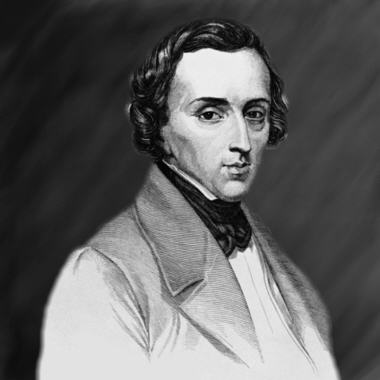
The Chopin Etudes Project - Introduction


 I'm awesome.


Dear Readers,

Many years ago, I made a pledge to myself.

I told myself that, before I die, I will learn and be able to perform Frederic Chopin's 24 Etudes, Op.10 and 25.

Now I'm ready.

Maybe.

The ultimate aim of the Chopin Etudes Project is to learn Chopin's Etudes. However, instead of doing it all by myself, I will post regular updates on this blog, writing my thoughts and comments as I study each etude, and posting audio recordings every now and then to showcase my progress.

Why Chopin's Etudes? Well, they are my favourite set of pieces for the piano, and Chopin is also undoubtedly my favourite composer for the piano. I find his pieces contain some kind of brilliant quality found nowhere else in the piano repetoire, the kind of thing that makes you go "Aaahhh...Chopin" and makes your heart melt. But there aren't only personal reasons. Chopin's Etudes are widely regarded as some of the most innovative, imaginative and, perhaps most of all, challenging pieces for the piano repetoire out there. I suppose you can call it the ultimate course of Romantic piano playing ("etuder" means "to study" in French, so "etudes" are "studies")

Before I move on, a few words on this word "learning". I was purposefully being careless with my word choice when I said that I will try and "learn" Chopin's Etudes. I believe that it is not actually possible to "learn" any piece of music. You can throw the word around and people will understand what you mean, but strictly speaking it makes no sense. Me personally, I have "learnt" a fair number of piano pieces in the past, however, whenever I end up performing them in front of an audience, I always hit a bum note somewhere and I never play it with the same confidence I have when practising at home. So my playing is not perfect. And what does "learn" mean in art, anyway? What does it mean to learn to play an instrument, or to learn to dance or learn to paint? I believe art is something you study, not learn.  

So what do I mean when I say that the ultimate aim of the project is to learn Chopin's Etudes? I initially foresaw it as this: I will be able to walk up to a piano in front of an audience, play all the etudes (without sheet music!) and receive a generally favourable, genuine response. It might sound slightly egotistical when I put it that way but that's essentially what I mean by "learn".

Unfortunately, I quickly realised that I doubt I will have the opportunity to ever perform for one hour straight in a piano recital. So I'll have to make do with plan B, which is: I will post a video on Youtube of a recording of the complete Chopin etudes, played by me, including good old fashioned scrolling sheet music, and if people "like" it, I'll be happy with that result.

OK, so we've established the end point of the project. Now some more details on the process:

Firstly, I can't guarantee that I will learn the etudes in order. I might skip about here and there, just to spice things up a bit.

Secondly, sadly I can't guarantee that this project will ever become finished. It's easy for me to sit here in front of my PC and ramble on about learning 24 of some of the most difficult pieces for piano, but stuff might come up in the future and I can't tell whether any success will come out of this or not. All I can say is this: this is not a "in-the-spur-of-the-moment" idea, I have been thinking about doing this for some time now. As for the etudes themselves, they have fascinated me ever since I was a child, and I find it difficult to imagine that that this fascination will ever stop, particularly when studying them. I might grow sick of them, but I know I will never stop loving them. Gosh, that sounds so cliche, doesn't it?

Thirdly, I have no teacher. The only teachers will be my conscious, the internet, and Chopin. While this is a risky move (and some of you will probably think of me as arrogant because of it!), I have decided that it will be part of the project. I would love to have a teacher but for now, getting one would be problematic and I'm willing to take the risk of diving in solo.

Now, the question that some of you will undoubtedly have on your mind: Who the hell am I?!

My name is Thomas Kobialka. I am 18 and I study Physics. I started playing piano at the age of 5 and, with help from three fantastic music teachers, finished the Grade 8 exam in the summer of 2010. However, I only started actually liking the damn instrument by the age of...10, or so. I started a Youtube channel (tomekkobialka) where I posted audio + sheet music videos of mostly piano pieces, including some of my own compositions. My passion started off as a fascination of mainly classical piano music after listening to my Dad's CD called "Piano for Dummies" but has since grown into a fascination of all sorts, from avant-garde to jazz to pop to opera. I occasionally compose music for video games and short films.

I am not a professional musician, in the sense that I don't make a living out of it, and I'm not a student of music. My completely formal music training finished with the grade 8 piano exam.

Simply put, music is a strong hobby of mine, and while my brain loves science, my passion ultimately lies in music. But, above all, I am deeply fascinated by Chopin's Etudes, and while part of the purpose of the project is to 'learn' Chopin's Etudes, the main purpose is to investigate the etudes mysteries and decode its difficulties, and share my findings on this blog. I like to describe myself as a musical explorer, a musical wanderer. I love discovering new things. I see musical performance as a side effect of this exploration, a kind of 'lab report', if you will. Don't get me wrong, I'm not demeaning musical performance in any way. But it's not the reason I love music.

Oh, one more thing. If you are unfamiliar with Chopin's Etudes, I recommend you look them up. I uploaded a complete set of videos on my Youtube channel, with audio and scrolling score. You can find more info on the Etudes' Wikipedia page. As far as recordings go, Pollini's Deutsche Grammophon recording is very good all-round. If you prefer to watch somebody play, Vyacheslav Gryaznov's recital performance is simply outstanding, as well as slightly terrifying. And finally, you can find the complete, free sheet music for the Etudes on Chopin's IMSLP site.
OK, best get practising now. I hope to put in at least 1 hour a day of piano practice. I will be posting updates on this blog hopefully at least once a week, summarizing what I've learnt and will also try to often provide audio recordings...maybe even videos.

I hope that, through doing this project, we can all together learn something...

Till next time! :D

I really should've taken that course in improvisation...


Saturday, 30 November 2013

Happy birthday Alkan!

Today, 30th November 2013, is the 200th anniversary of Charles-Valentin Alkan's birthday (1813-88), one of the greatest yet most overlooked pianinst-composers of the early 19th century. This was the pianist whom Liszt allegedly described as having "the finest technique I had ever known", the pianist who shut himself away from the public for 20 years and, among other things during that time, produced both a symphony and a concerto for solo piano as part of a set of 12 etudes in the minor keys (Op.39).

You don't wanna mess with Alkan.

The first time I came across this composer was...whew, some 4 or 5 years ago now? The first piece of his that I discovered "consciously" (i.e. I was aware that I was listening to Alkan) was a video of a performance on Youtube (but not the video below) of the 5th etude from his Op.35 set of etudes in all the major keys:


For some reason, however, the "Allegro Barbaro" didn't quite click with me at that time, at least not enough to make me want to listen to more works by the composer. It was indeed "etude-y", and I came away with the wrong impression that Alkan's writing is difficult, but dry and not particularly interesting to listen to.

A few weeks later I came across the following video:


That first C octave in the bass, and what came after it, changed my life completely.

Well, OK, maybe it wasn't that dramatic, but...boy, was I impressed! It was like I just stumbled across something I had been searching for for a very long time. The melody at 0:07 was catchy, but I really liked the C# in the bass at the start of each bar, almost as if the piano had become some sort of demonic percussion instrument. 

From 0:20, my jaw just dropped.

But what struck me the most was not so much the pure difficulty of the piece, or M.A. Hamelin's virtuosic skills, but the fact that this sounded like something that Liszt or Chopin might produce. This wasn't some "New-Age" obscurity, it was obviously a piece that has been around for at least 100 years...so who was the composer?! I already knew Chopin's music well enough to know that it probably wasn't something by him, because I would've known about it already. I knew Liszt much less well, so could it be something by him? I guess the real question was: What do those Japanese characters mean? Alas, I found myself in the same position as the video uploader (who posted this video to find the name of the piece Hamelin was playing).

A quick scroll down to the comments section answered my question: it was Hamelin playing the ending of the 3rd movement from Alkan's Concerto for Solo Piano, Op.39 No.10. The composer was the same dude who wrote that white-key etude I listened to just a few weeks ago!

And so I have officially entered the weird and wonderful world of Alkan and his music.

The rest of this post will be made up of a few commentaries on some more of Alkan's pieces which really stood out for me. Although I am sure that some of you who are reading this post are already well accustomed with Alkan's musical output, I wanted to share what I think are Alkan's really greatest compositions. After all, it is Alkan's 200th birthday!

-------------------------------------------------------------

 Op.39 Nos. 8-10: Concerto for Solo Piano


OK, this is just nuts. A concerto for solo piano? For solo piano? A CONCERTO?!

Although this isn't the first example of a piano concerto written for the solo piano (I think Bach's Italian Concerto BWV 971 was the first), this 3-movement work by Alkan certainly takes piano writing to the next level. It is about 50 minutes long (apparently the longest single work for the solo piano written during the Romantic Period) and is, to put it simply, epic.

Some of the piano writing in there you've never seen before, demonstrating that not only was Alkan a great composer but he was also a creative genius. He also makes a great job of separating the "orchestral" sections from the solo piano sections - you can clearly hear these transitions. Besides, the "orchestral" sections really do sound orchestral, and this is largely thanks to Alkan's creative 'orchestration' of certain piano passages. It's almost like a piano transcription of an orchestral work...but that would be an understatement. It is much more elaborate than that, because at the same time, it is clear that this work was written for solo piano.

The video above is the first part of Hamelin's performance of the complete concerto at Casals Hall in Tokyo. If you haven't listened to it yet, I strongly recommend you give it a try now. There are other, better quality recordings of the concerto on Youtube for you to listen to if you so wish.

------------------------------------------------------------- 

  Op.39 No. 12: Le Festin d'Esope


This piece also comes from the Op.39 set of minor-key etudes - Le Festin d'Esope is a set of 25 variations based on a simple theme, with each variation acting as a sort of 'etude' in itself, which all flow one after another in a smart and logical fashion. I love this piece just because of the sheer creativity present within it. Some variations which really stand out for me (even though each one of them is highly interesting in their own right):

Var III: That 7th chord permeating this variation adds a uniquely humorous touch to the Aesop theme, not to mention those two bass "punctuation marks" on every 4th bar, which are also pretty funny! 

Vars IX-X: Really beautiful writing here. The harmonies themselves make you sink into the music.

Var XIII: Awkward, but original and hilarious!

Vars XIV-XV:  These deserve a special mention simply because of their difficulty (mostly in XV). 

Vars XVII-XVIII: Again, these are especially difficult - the right hand in XVII is a killer, and the left hand becomes one too in XVIII. Alkan is known to write passages like this where the music is not simply "crazy" but bat**** insane.

Vars XXI-XXII: "Alkan the Clown". These variations invoke a cheesy kind of happiness, especially in XXII, where the chromatic runs jumping across the keyboard really shows us Alkan's great sense of humour. No need to mention the penultimate bar, where Alkan obviously wanted the player to resemble somebody bashing on the keyboard...

-------------------------------------------------------------

Op.33 Grande Sonate 'Les quatre ages' 
2nd movement "30 ans"


The 2nd movement from this unique four movement 'sonate' is, in my opinion, one of Alkan's most beautiful compositions. No other piece of music has been able to fill me with quite so much nostalgia. 1:50 to 2:48, for some reason, brings me right back to my childhood (even though I have nothing to link my childhood with that melody, let alone Alkan!), and I really think this has a lot to say about Alkan as a composer. 

------------------------------------------------------------- 

Op.31 Preludes, No.8: "La Chanson de la folle au bord de la mer"


And finally, we have this eerie and haunting piece from the Op.31 set of 25 preludes. Some of Alkan's pieces of music are able to evoke such vivid imagery, and I think this particular prelude is one of the prime examples of that. It's a calm, misty morning at the seaside, and somewhere amid the fog you begin to hear...

------------------------------------------------------------- 

In my opinion, Alkan is truly one of the most overlooked and under-appreciated composers from the Romantic period. Today I entered Waterstone's, went over to the magazine section and took a look inside the BBC's Classical Music magazine, expecting to find some article on the subject of Alkan's 200th anniversary, but I couldn't find a thing. 

Shame, really. 

Hopefully this post gave any new-comers some insight into Alkan's work and influence as a composer, and perhaps some of you will become inclined to further explore Alkan's rich and wonderful works (try the Symphony for Solo Piano, or Le Chemin de Fer). 

Happy 200th anniversary!


Tuesday, 19 November 2013

An apology

Some of you will have no doubt realised that this blog has been a bit silent recently.

Well, OK, by "a bit silent", I mean totally abandoned, and by recently, I mean for the past two years.

You see, things have been pretty busy for me in the last few months (as things sometimes are), and although things are about to get a whole lot busier, I've decided to pay more attention to this poor blog of mine. Because, you see, the fact that things have been busy for me isn't the real reason why I haven't been posting; no, the real reason why I haven't been posting is because I am a very lazy person.

I apologize for being a lazy person.

So, let's just say that I will be paying more attention to this blog in the future. It's been idle for too long now...I feel like I need to write something about something somewhere on here.

Most of the topics I'll post on will be music-related (though I can't guarantee that; all topics might be music-related). E.g. I'm willing to offer some insight into my composing process (there hardly is any!) and talk about some of the tools I use. I might insert an 'oddball' here or there, but I won't worry about that now...I need to get something written in the first place!

Anyway, we'll see how it goes.

As for my Youtube channel, nothing has happened much on there, and I'm afraid that things aren't looking too hopeful. A few days ago I wanted to upload a video containing two tracks from M.A. Hamelin's latest album release: "Busoni: Late Piano Music", the two tracks which are included in Hyperion's November free 'sampler' (i.e. tracks 7 & 36), along with the sheet music. Unfortunately, this 6-minute video barely had a chance to breathe before it was blocked worldwide due to Youtube detecting material possibly belonging to Hyperion Records Ltd. I mean, OK, technically you're right, but I chose those free tracks for a reason! :S

Hence I've more or less given up with uploading other people's works. Unless there's a lot of demand I could head back to Cziffra (whose recordings are relatively 'safe'), or do something new altogether.  

I may be able to compose something and upload it on Youtube, but 99% of the time I end up hitting a brick wall...for reasons I'll cover in another post (and trust me, I have been trying!).

That's it for now! And watch this space - hopefully this place will get more interesting in the future. 

Hopefully.


Sunday, 12 June 2011

Friedrich Kalkbrenner

I've recently been reading Chopin's biography, and as I'd expected, the bio mentions Chopin's musical friends while in Paris (Franz Liszt, Hector Berlioz, Mendelssohn etc.). I also came across a name I'd never heard of before: Friedrich Kalbrenner, a pianist. According to the biography, Chopin thought very higly of Kalkbrenner, and Chopin even said once that he 'felt unworthy of untying his shoelaces'.

I grew interested about this guy, so I looked him up on the internet, and was astounded to find that he had written more than 200 piano works, piano concertos and operas of which a few have ever been recorded. He was also the first pianist to introduce rapid octave scales into the piano repetoire.

I think it's time to revive Kalkbrenner on Youtube! I'm currently transcribing his Brilliant Variations on a Mazurka by Chopin (Op. 120), and hopefully I'll finish it someday.

Friday, 10 June 2011

How To Train Your Dragon Two Piano Transcription


John Powell is, along with Hans Zimmer, one of my favourite film composers of today. While Hans scores in a very simplistic, self-taught 'German' style (nothing wrong with that of course, just makes you wonder why you never thought of his melodies in the first place), John Powell's extreme flexibility leaves you wondering what type of soundtrack he will compose next (in other words, he can compose electronic music just as well as orchestral).
Therefore, as I have already done transcriptions of some of Zimmer's works, I decided to do something by John Powell. Immediately I went for his HTTYD score, which not only is WAAAY better than the score to 'The Social Network', but is easy to listen to and would be doable as a two-piano transcription.
I then decided which piece to do. I was thinking of doing either 'Test Drive' or 'See You Tomorrow', but as the spirit of tomekkobialka goes, I had to choose something that would be almost impossible to play on the piano. So I took the 10 minute battle music and decided to do that.
My main point in doing this transcription was to experiment with how different orchestral techniques can be recreated on the piano. Powell's orchestra contains more than 100 players:
·         2 Flutes
·         1 Piccolo
·         2 Oboes
·         1 Cor Anglais
·         3 Clarinet
·         2 Bassoons
·         1 Contrabassoon
·         12 French Horns (yes, 12!)
·         4 Trumpets
·         4 Trombones
·         2 Bass Trombones
·         1 Tuba
·         Timpani
·         Tubular bells
·         Piatti (cymbal)
·         Sustained cymbal
·         Anvils
·         Gong
·         Tam-Tam
·         Chinese Cymbal
·         Snare Drum
·         Bass Drum
·         Piano
·         2 Harps
·         Full SATB Choir
·         30 Violins
·         12 Violas
·         10 Celli
·         8 Double Basses

You can imagine what I felt like when I saw this. How can you convert all these voice parts into two pianos??? Well...you can't, so I had to leave stuff out. (I also thought to myself how does John Powell get his head around so many instruments? He obviously had a lot of orchestrators at his disposal, in fact, he had 10, probably because it took one orchestrator a week to orchestrate one track!).
N.B. - unlike many lucky musicians out there, I don't have perfect pitch, so I can only rely on the original orchestral score :(
For example, have a look at this page from the original conductor's score (this bit comes from between 5:40 - 5:48 in my transcription) (click on image to zoom) :


I mean, where do you start?! It takes a long time to decipher which instruments are being doubled and which ones to include in the transcription etc... in this case, I felt tempted to take the harp part, the horns and trumpets playing the melody and the...bass clef of the piano part (if the pianos already in there then why not use it again? :) ) So it all went well, but after two bars I could see that the flutes play these slides up. Now how do I add that into the transcription, it seems almost impossible!

This kind of problem solving was very common. Here's another example (between 6:25 - 6:34):


This time, the problem is the strings. Those lines tell the string players to slide their fingers from one note to another, while playing a continuous bow stroke. And on top of that you have the double basses 'slapping'. Now how do you recreate this sliding effect on the piano? To solve this I had to use lots of pedal and chromatic notes going up and down to create the general idea of chaos. You may also notice that in the second bar, the piano and bass woodwinds play a B-flat, but the main melody, played by the tuba/trombones and cello/DB, is a B natural. You can't hear this in the recording, as there is so much going on, but if I recreated this clash in the piano, it would be very evident. So again, I had to point these mistakes out (and there are actually quite a lot of these in the whole score, some of which I doubt were intentional...)

So there! I hope you enjoy my transcription, and I hope maybe someday some duo will be brave enough to play it. 


Saturday, 5 March 2011

Toccata Grottesca - Hamelin Etude No.5

My next video is an audio + sheet music one of Hamelin's recently-released complete Etudes (which he has been composing for over 20 years!). It is the beginning of my next project which is to finish off Hamelin's etudes so that an audio + sheet music of every of his etudes will be available someweher on Youtube.

Please comment and rate!

Friday, 4 February 2011

What IS musicality?

A very broad topic, of course, but one in which I am interested in.

My Youtube uploads have covered a vast area of music, ranging from Liszt to Finnissy. And I cannot help but notice how so many people comment on Finnissy's videos (I have uploaded some of th English Country Tunes) quite negatively. On one video, otovioandradas writes:

"the funny thing about the people who seem to enjoy this music is that they HAVE TO LOOK at the score to actually say things like: wow, it 's so complex!", or "wow, this must be so difficult to play!". These people seem to ignore the very basics about music: that it is SOUND. And as far as SOUND goes, this music is DULL."

marcphilos writes:

"If dog vomit had a sound, this would be it."

JianyuTheLegend writes:

 "theres actually people who think this is music lol
they must be insane"

And it is clear when you listen to the video (at the bottom of this post) that there is a significant difference between the melody and harmony in it than the melody and harmony in e.g. Jingle Bells or the Beautiful Blue Danube.

And so what is musicality? Why are some pieces of music 'less musical' than other pieces?  Why is banging seemingly random chords on the piano considered as 'dull sound'? There seems to be some strange perception in everyone's brain where a C major chord sounds much more pleasing than the bottom two keys of a piano played together. 

To be completely honest, I think that there is no such thing as a piece that's scientifically more musical than another. Musicality is an illusion in our brain that we were born with, which gives us emotion based on a series of sounds which somehow fit so well together. A piece of music cannot be totally proven to have a certain level of musicality. You can say that a piece in G major is more musical than a dissonant, Finnissy-type piece, but why does the major scale fit so well to the ear? What's so special about WWHWWWH that makes the music feel happy? Why not sad?

Musicality is an illusion in our brain, that's why.